AI Chatbot Development Company
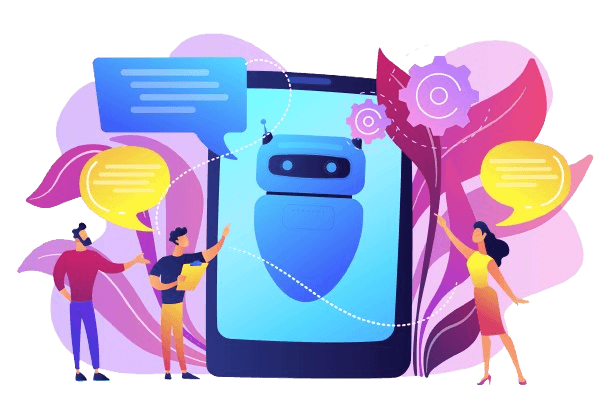
We build AI chatbots from scratch, including design, development, integration and post-deployment optimisation. Our clients typically approach us because they've either used a no-code chatbot builder and found it only got them so far, or they've commissioned an agency to build a chatbot that doesn't integrate with their CRM. We approach both scenarios the same way, by building the chatbot as a piece of software that needs to integrate with your systems.

1. Custom Chatbot Development
We deliver custom chatbots built around your specific use case, whether it is customer support, lead qualification, scheduling, or product recommendations. Our team works with Dialogflow, Rasa, Microsoft Bot Framework, and LangChain, choosing the framework based on your project's specific needs. All of our bots maintain state across conversations, are trained on your data, and work on your website, WhatsApp, Slack, and mobile apps.
Use Cases:
2. Multichannel Chatbot Deployment
We integrate your chatbot across all channels your customers will use: websites, mobile apps, Facebook, Instagram, WhatsApp, Telegram and integrated CRMs. The chatbot is the same single, trained instance for every channel, so your users have the same experience whether they engage with you on Instagram or your website. All of your conversation history and analytics are captured in a single dashboard rather than five.
What you get:
3. NLP and LLMs with Automation Tools
We connect NLP and LLMs to automation software such as n8n, Zapier and Make to get work done by your chatbot. A user sends "view my latest invoice", the bot understands the request, triggers an n8n workflow, retrieves the data from your billing system and sends the result back quickly without a ticket and human.
Our Expertise Includes:
4. Voice-Enabled Chatbots
We build chatbots with voice support for scenarios where it's hard to type, such as medical reception, travel, and automotive banking. Our solutions use Speech-to-Text and Text-to-Speech from Google, Amazon Polly and Azure Cognitive Services, optimised for accent recognition and speed. The chatbots are multilingual, with language detection that automatically switches during conversation.
5. Chatbot Analytics and Optimization
We offer analytics and optimisation services that monitor user drop-offs, intents that don't work, and escalations to human agents. Using the information the data provides, we retrain models on the unsuccessful conversations, rewrite fallback messages for the questions people ask, and optimise the flows according to users' behaviour. We also run the reporting cycle in a loop, so the bot continues to improve rather than stagnate after deployment.
6. Chatbot Integration with Existing Systems
We integrate your chatbot with the existing systems you use, such as Salesforce, HubSpot, SAP, Oracle, databases, and marketing software like Marketo. We've built Slack bots that answer queries from HR, Shopify integrations that draw real-time stock levels, and WhatsApp bots that connect to proprietary banking systems. The chatbot can then work with anything you have in your stack.
7. Maintenance, Scaling and Support
We provide ongoing maintenance, scaling and support on a retainer. We do work on training data as queries evolve, monitoring to detect latency problems early, scaling to handle more conversations, and new features based on your analytics. The goal is a chatbot that improves each quarter, rather than languishes until no one uses it.
Our chatbot projects revolve around three key concerns for production: the bot's understanding of the user, its ability to respond correctly, and the security of the user's data. When you engage chatbot developers with Agicent, you're hiring a team that understands all three and that's why our bots work in enterprise settings.
Conversational Intelligence
We build bots that engage in conversation instead of keyword matching. The NLP and LLM models we build on keep track of intent across turns, recall previous information, and adapt their tone to the context. And, when someone complaining about a bill is treated differently to someone inquiring about pricing plans for a simple user query clarification.
What we build in:
Knowledge and Accuracy
A bot that confidently makes up incorrect answers is worse than no bot. So, we combine LLMs with retrieval systems to ensure responses are sourced from your business data, not the foundation model's memory.
How we handle it:
Integrations and Automation Connectivity
A chatbot is worth its weight in gold when it integrates with existing systems. We integrate across the enterprise stack so the bot can read and write data and trigger processes without copy and paste.
What we integrate most often:
Security and Compliance You Can Trust
We don't bolt data protection onto our products. It's baked into the core. Our enterprise customers are generally in regulated industries, so we've been doing this a lot in health care, finance and legal-related industries.
Data Handling and Privacy
Compliance Standards
We build omnichannel chatbots that provide your brand with a unified, smart presence across all the channels your customers use, including web, mobile, messaging and voice.
Unified Experience Across Channels
Customers don't stay in one place. They visit your website, chat with you on WhatsApp, check out your Instagram, and mention you on Slack or Messenger. Our omnichannel chatbots ensure that conversations continue seamlessly across channels, without users having to repeat information or context.
What we design for:
Web Widgets:
Customizable chatbots that can be integrated into your website for 24/7 support.
In-App SDKs:
Mobile chatbots for iOS and Android apps with in-app context awareness.
Messaging Channels:
Native integration with WhatsApp, Messenger, Slack, Instagram, Telegram and more.
Social Media CX:
Conversational product discovery and support on your brand's social media accounts.
CRM and Support Integration:
Smooth handoff from channels to your support software such as Zendesk, HubSpot or Freshdesk.


Voice Assistants and Conversational IVR
Voice interactions are no longer an additional feature, but an expectation, particularly for customers looking for quick or hands-free support. Our voice chatbots deliver human-like naturalness and convenience to your customers.
Key voice capabilities we deliver:
IVR Deflection and Call Reduction:
Voice bots that answer routine questions, allowing human agents to focus on the more complicated ones, and reducing call center volume by 40%.
Voice Understanding:
Speech-to-text and intent recognition that captures context, tone and sentiment for more natural interactions.
Voice and Text Integration:
Smooth transitions between text and voice, ideal for mobile users or people on the go.
Hands-Free Support:
Voice interaction for customers who are busy, on the road or walking, offering convenience and accessibility.
Multilingual Interactions:
Voice interactions in multiple languages, to help your brand be globally relevant and locally relevant.
In the new multi-touch point customer journeys, it's not about being everywhere. It's being consistent, relevant and connected across all channels that makes the difference, and that's where our AI Chatbot Development services excel.

1. Consistent Customer Journeys: Lead to Conversion
Customers seamlessly switch between websites, apps, and messaging apps, and expect the conversation to continue. Using our omnichannel chatbots, a customer can begin a conversation on WhatsApp, view recommendations in your mobile app and finish their purchase on your website, all while maintaining context and personalisation.
Brands undergoing omnichannel transformations report 5-15% revenue growth, and retail brands with connected channel experiences have 250% higher conversion rates than single-channel brands. Customers now use almost 6 channels on average, and over 50% interact with four or more channels regularly, so context is now a must-have.

2. In-Chat Revenue Enablement
We make conversations transactional. We embed payment and product catalogues within messaging apps, allowing your customers to shop and checkout within the chat.
Multichannel marketers who use 3 or more channels have 494% higher order rates than those who use 1 (0.83% vs 0.14%). Target's omnichannel strategy led to a 24.3% sales increase and 195% growth in digital sales in a quarter, while Nike's omnichannel investment enabled eCommerce sales to reach over 30% of total sales, with a goal of 50%.
3. CRM Enrichment and Personalization at Scale
As conversations are data, our chatbots provide structured data to your CRM, enhancing segmentation, personalization and predictive analytics. Through RAG-based integrations and analytics, chatbots keep your CRM up-to-date and primed for future engagement.
Brands with effective omnichannel engagement have 89% customer retention rates, while those with poor engagement have 33%. Customers who use both online and offline channels are 30% more valuable to retailers, and those that centralise CX data have reduced call times from 5 minutes to 2-3 minutes.

4. Operational Efficiency and Measurable ROI
Omnichannel chatbots dramatically cut back-end processes while enhancing decision-making. Companies with omnichannel consistency experience 9.5% greater annual revenue growth and up to 13% bigger order sizes.
Omnichannel retail marketing campaigns have 250% greater engagement and conversion rates than single-channel campaigns. The omnichannel CX market was valued at $14.2B in 2023 and is expected to reach $35.6B by 2032 with a 10.8% CAGR, which bodes well for enterprise adoption.
In short, the single dashboards we create aggregate engagement, deflection and sentiment metrics across channels, so you can see at a glance what's performing and what needs improvement.
We use a fit-for-purpose, modular architecture that balances innovation, scalability, and enterprise control.
Channels
We start with the backend to get the core logic right and make sure everything works under production conditions, then layer the user-facing surface on top.
Where Users Show Up
The first component is message intake, because the chatbot needs to connect with users on their terms. No matter how they interact - whether they send a text message on a web page, a voice message on WhatsApp, an image in Slack, or make a phone call through Twilio - the system converts it all to a common internal format before it gets processed. The technologies that make this happen include web and mobile SDKs in React or Flutter, messaging adapters for WhatsApp Business API, Messenger, Slack and Telegram, voice intake via Twilio or Amazon Connect, and a front-end API gateway on NGINX or AWS API Gateway.
The Front Door
Once the channels are integrated, all the traffic flows through one API gateway. This is where throttling, authentication and basic validation takes place, and where channel-specific data formats are translated into the standard format used by the rest of the system. Without this step, all the services downstream end up having to support parsing WhatsApp webhooks, Slack events, and web payloads, which is where projects start to accumulate bugs faster than you can say "regression". Here we use NGINX, Kong, AWS API Gateway, or Cloudflare Workers, depending on the deployment and the existing infrastructure.
How the Bot Thinks
This is responsible for intent recognition, entity extraction, session management and the dialog flow that decides when to use a deterministic rule, and when to use an LLM. We almost always use a hybrid approach here because LLMs are creative but unpredictable, and you don't want creativity when making payments. Deterministic NLU (with Rasa, Dialogflow, Microsoft LUIS) for transactional intents (bookings, payments) and the LLM for open-ended queries (explanations, recommendations). Memory is split too, with short-term memory in Redis for quick lookups and long-term memory in the main database for longer-term personalization.
Where the Truth Lives
We also build the retrieval layer that grounds the bot's responses around your data at about the same time. This is the layer that prevents the bot from inventing answers, and is more important than most clients expect. We load your product list, support articles, company policies and CRM history into a vector store, typically Pinecone or Milvus, Weaviate, or if sensitive data is involved, the open-source FAISS vector store. When someone asks a question, we search your actual content first and then feed the relevant bits to the LLM along with the question. The bot responds with what's true and correct about your business, not what it learned when it was trained, and you see the improvement immediately.
The Brain: Connect LLM Model
We choose the model based on the project requirements, depending on the cost, speed and compliance requirements, using OpenAI GPT and Anthropic Claude, Mistral and Google Gemini, rather than the one that's the latest and hottest at the time. The agent layer is where the tool calls and function calls go, which is how certain sensitive actions, such as refunding someone or updating someone's customer data, move out of the LLM and into the secure backend systems. The model makes the decisions, but doesn't access the systems. And we're keeping the reasoning of the model hidden from the user, so the model's thinking doesn't seep through the response.
Connecting to Your Stack
The integration layer is what makes the chatbot useful. We connect it to the other software systems you use, like Salesforce or HubSpot for customer relationship management, SAP or Oracle for enterprise resource planning, Zendesk or Freshdesk to hand off to support agents, Stripe, Paypal or Razorpay for online payments within the chat, and SSO (single sign-on) via SAML, OAuth or OpenID Connect for authenticated users. For simpler stuff that doesn't require code, we use n8n, Zapier or Make. Each integration is done one at a time, in staging first, and only gets deployed to production once it's been tested under load.
Where the Data Sits
And behind all this is the storage piece that most teams tend to neglect and regret. We separate storage to each component's role rather than putting it all into one database. We also use Redis for the fast, in-memory session data, Postgres or MySQL for structured data, Kafka (or RabbitMQ) for the event stream and audit logs and S3 (or MinIO) for the transcripts and media. We scale each layer to the data it's storing, so you're not paying that much in cloud costs as conversations increase.
Watching and Locking Down
Once the bot is running, we want to find out what it's up to. Logging and metrics come from Prometheus, Grafana and the ELK stack, with conversation analytics and CSAT (customer satisfaction), intent success, and conversions added in through either Mixpanel or Amplitude, or custom dashboards. Moderation involves OpenAI or Anthropic safety checks and custom rules to catch PII and prevent it from showing up in logs or responses. For security, we encrypt traffic in transit (TLS 1.3) and at rest (AES-256), we secure secrets in HashiCorp Vault or AWS Secrets Manager, and provide RBAC controls for every admin portal. For enterprise clients, we build for GDPR, HIPAA, and SOC2 compliance from the beginning - retrofitting can be expensive.
Shipping and Handing Off
The entire system gets deployed via Kubernetes (EKS, GKE, AKS), with serverless functions (AWS Lambda or Google Cloud Functions) for the parts that need to be fast, and gets shipped via GitHub Actions or GitLab CI, with Terraform for infrastructure-as-code. The last, and most overlooked, part is the handoff. When the bot can't help, the human agent sees the full conversation and its suggestions, and any corrections made by the human agent go back into the training set so the bot learns from every escalation rather than making the same mistake twice.
All our chatbots go through six stages. This isn't just how we decided to do it for neatness. We skip a stage and the bots tend to get rebuilt in six months. This is how we work from the moment we first speak to you until the bot is in production.

Discovery and Planning
We talk about what we are building and why, before we start writing code. It takes about one or two weeks, depending on complexity, and it's where the embarrassing questions are asked. So, we begin with interviews with leaders about what your business is doing, who your bot audience is, and what key performance indicators (KPIs) you want to impact. Next up we map out the user stories the bot will support, whether it be sales support, lead generation, onboarding, feedback, etc, and we take stock of what existing systems you might have to see what we can integrate with and what we might need to build. This is also where we decide between GPT, Claude, Gemini and Mistral that will work for you, based on your needs, budget and compliance constraints. The end of the phase involves a requirements document and a schedule that everyone agrees on.
Prototype and Validation
With a clear idea of what we're building, we can prototype it first. This part of the process exists because most conversation flows you think up on a Miro board don't work when a real person enters something unexpected. It's a lot better to learn that at this point when it's a clickable mockup than partway through development when you've got 50% of the back end put in place. We draw the flows and trees in Figma or Miro or Botmock depending on whatever works for your team so you don't have to learn a new tool for this. We also nail down the bot's voice here, whether that's likeable, friendly, punchy, tame, or even formal, from what your brand actually sounds like on social media, not how your brand handbook says you should sound like. We create a clickable version or no-code app from the flows and test it with your users and a few of your colleagues. This feedback is brutal - and also what informs the sample data and intents that we pass to the next phase for the first round of training.
Design and Conversation Engineering
This is also where the UX work and the AI work converge. We put the flows the user has approved through prototyping into a system that can have a conversation, remembers what was said three messages ago, and speaks in the voice of your brand (and not a generic bot voice). It's where the UX is determined and that's the bit people will remember after the honeymoon period. The user interface elements are designed for all the platforms you want the bot to show up on, be it a web page, an app chat window, or a WhatsApp chat. Behind all that, we create the dialog states, conversations history and intent hierarchies that keep the conversation going rather than starting over again. We also drop in the prompt templates and guardrails for the generative model so the open-ended responses are accurate, stay on-brand, and don't do anything you don't want. If you want to target users in different regions, we can set up dynamic language switching, sentiment analysis and tone adjustment, so your bot doesn't always sound like an English voice, regardless of the user's language.
Build and Integrate
With the design finalised, we start full-stack development. This takes the longest, as we integrate the chatbot to your customer relationship management system (CRM), enterprise resource planning system (ERP), credit card system, and anything else the chatbot needs to read and write to. The different integrations get written one by one, with each one getting tested in staging and then moved to production only when ready to handle the load. The back-end gets written as microservices in Node.js or Python, depending on the project and the team that will be running it after we're gone. Retrieval-augmented generation (RAG) with vector databases gets hooked up to ensure responses are factual and the hybrid natural language understanding (NLU) and large language model (LLM) flow gets setup to ensure deterministic processes stay deterministic, but creative ones remain creative. APIs go in to your CRM, ERP and other systems for real-time data lookups, and lightweight automation goes through n8n or Zapier. Authentication, security, GDPR features, and SOC2 considerations go in as well.
QA and Internal Testing
The bot passes through formal testing before release, in the form of functionality, performance and compliance testing. We mostly fix issues that don't show up until the final development cycle, such as corner cases in fallback logic, performance bottlenecks that only become apparent when lots of real conversation data is used and tested, or PII handling vulnerabilities discovered when we start using real user data. We test on all the channels the bot should run on (web, app, WhatsApp, Slack, etc.) as well as any channel-specific surfaces unique to the project, so that the experience is consistent no matter what's being used, and the bot doesn't crash on the channel that the team didn't test enough on. We also test intent recognition, fallback responses, and context memory, not just on individual messages. Understanding your peak traffic expectations, load tests ensure you can handle the anticipated and anticipated plus conversations. Security of data, PII masking, and conversation logs are tested against your industry's compliance requirements, and data dashboards and A/B testing pipelines are tested to be able to report on the interaction immediately after launch.
Launch and Optimize
Launch is the beginning of the optimisation stage, not the last stage. Post-launch we enter the optimization phase because once the bot is deployed in production, and users interact with it in quantities that can't be truly replicated during testing, its performance shifts. The bot is deployed on your choice of cloud - AWS, Azure or GCP - with auto-scaling infrastructure that matches the real traffic load rather than peak load. Observability dashboards in real-time monitor usage, latency, and accuracy, including intent success, so the team can fix issues before they become customer complaints. We then do A/B testing of prompts to promote engagement and intents, look through conversation analytics for unhandled intents, CSAT trends, and conversion results, and do weekly tuning sessions to experiment with different prompts and data sources, and fine tuning of the model based on conversations. We charge for post-deployment support on retainer, which includes training, updates and new feature development.
We offer flexible, value-based pricing with no hidden fees or lock-ins. So, whether you're piloting a chatbot or building conversational AI across the enterprise, our plans scale with your needs. No fixed terms, no hidden costs - just pay as you go.

Starter Chatbot Team
Ideal for small businesses or quick POCs
Billed Monthly

Professional Chatbot Team
For startups scaling fast or multi-channel chatbot builds
Billed Monthly

Enterprise Chatbot Team
For large-scale, data-rich, or compliance-driven chatbot projects
Billed Monthly
If you need a custom enterprise setup or want to discuss a dedicated chatbot engineering team, reach out directly at [email protected] or schedule a discovery call with our experts.
| Criteria | Our AI Chatbot Development Company | Other Chatbot Development Companies |
|---|---|---|
| Measured Accuracy & Grounded Responses | Built with hallucination control, evaluation suites, and RAG pipelines referencing CRM and knowledge bases. Every factual answer includes citations and context grounding. | Often rely on generic LLMs without retrieval grounding, leading to inconsistent or fabricated responses. |
| Scalability & Reliability | Enterprise-grade infrastructure with 99.9% uptime SLA, auto-scaling, caching, and rate-limit strategies. Designed to handle millions of conversations seamlessly. | Prone to slowdowns or outages during peak loads; limited support for distributed scaling and monitoring. |
| Ownership & Portability | You retain full ownership of all prompts, data, and logic. No vendor lock-ins. Portable architecture deployable on your preferred cloud (AWS, Azure, GCP). | Lock-ins with proprietary platforms and limited export rights for data or configurations. |
| Security & Compliance | GDPR and HIPAA-ready, with PII minimization, encryption, and SSO/RBAC. Regular audits and transparent logs for enterprise compliance. | Basic encryption, no dedicated compliance documentation, and limited enterprise readiness. |
| Cross-Functional Expertise | AI engineers, NLP specialists, and UX designers collaborate to ensure business alignment and technical excellence. Proven experience across retail, healthcare, finance, SaaS, and logistics. | Generalized development teams with limited domain-specific expertise and fragmented AI capabilities. |
| Conversational Intelligence | Deep intent detection, contextual memory, tone adaptation, and personalization for truly human-like experiences. | Scripted or keyword-based flows with limited contextual awareness or personality. |
| Continuous Optimization | Post-launch A/B testing, analytics instrumentation, and weekly tuning sprints to improve performance and ROI. | Minimal support after delivery; lack of structured optimization cycles or performance tracking. |
| Integration Ecosystem | Ready to connect with CRM (Salesforce, HubSpot), ERP (SAP, Oracle), CMS, payment gateways, and analytics platforms. | Limited or manual integration capabilities; poor support for enterprise ecosystems. |
| Transparency & Collaboration | Dedicated success manager, clear communication, and co-owning project roadmaps for full visibility. | Communication gaps, unclear documentation, and rigid delivery models. |
| Real Business Outcomes | Measurable impact: higher CSAT, faster resolution, improved deflection, and tangible ROI across customer touchpoints. | Focused on delivery speed, not on measurable business or CX outcomes. |
Industry: Lifestyle
Business Type: Startup
It began with a clear vision, to ease the transition into college for first-time students. Peak Education's InterWoven was designed to bridge the gap between high school students and their college peers who have overcome similar obstacles, particularly first-generation, low-income and rural students. When the InterWoven team approached us, they wanted a chatbot to establish a rapport between two worlds, and they wanted it quickly.
Our team developed a chatbot in a week using Socket.IO, enabling real-time, natural language conversations on the platform. It was less like a computer and more like a mentor, just what the team wanted. The chatbot was the centrepiece of the app, where students could share their concerns, ask questions, and read stories from people who have been through similar experiences.

Key Features:
A valuable digital environment that builds confidence, community and connection, designed with empathy and empowered by non-intrusive technology. The tech stack is based on Socket.IO for real-time messaging, secure communication protocols, and a chat framework that is optimised for the kinds of conversations that would be happening on the site.
Tech Stack: Socket.IO · Real-time Messaging · Secure Communication Protocols · Optimized Chat Framework
If you want to try the InterWoven chatbot, you can do so here.

Industry: SaaS
Business Type: Startup
In May 2025, Tide360's founders approached us with a question: what if companies could employ AI employees that are always on time, productive, and never take sick days? They weren't talking about a chatbot. They envisioned an AI Business Operating System, where AI agents are like real employees who schedule meetings, keep track of finances, coach on productivity, and even answer phone calls when necessary. We set about creating an AI workforce that combines intelligence, independence and trust into the fabric of a real business.
The project began with extensive workflow mapping to understand how CEOs think, how teams communicate across departments, and how work gets done from inception to completion in a growing business. Most AI solutions fail because they're based on assumptions of how work is done rather than how it is done. That’s why in the early stages, we mapped existing workflows so our agents could fit into the existing work patterns rather than requiring teams to change their behaviour.
Tech Stack: React for the front end, Laravel and MySQL for the back end, BotPress for conversational logic, n8n for workflow automation, and GoHighLevel CRM for customer relationship management. The design is modular, so new agents can be added as Tide360's product grows and long-term memory can be built as each agent learns from the workflows it supports.
Results:Tide360 teams saved 8-12 hours per week per employee, achieved 3-4 times the ROI in the first quarter, and reduced the administrative burden by 70% in the departments where agents were deployed. Over 25 business teams signed up for the pilot and validated the founders' vision: this is the future of work, where any company can be a Fortune 500 with an AI workforce to complement their human workforce.
We've developed chatbots for most industries and the process always begins with the question: what are the communication norms in this industry, and what do they need to do that existing chatbots don't support?
eCommerce and Retail
For e-commerce customers, we create chatbots that are shopping assistants, not search engines. We build a retrieval layer on top of the product catalogue, and then a personalisation layer on top of that using the user's browsing and purchase history, and the intent of the current chat. The bot makes recommendations, queries on size or fit, order status, returns, and even payments, all within the chat, which is what actually drives conversion, rather than sending the user back to a separate checkout page.
Healthcare
Healthcare chatbots are architected to HIPAA standards before we even start designing workflows, which means encryption, personally identifiable information (PII) handling, audit trails and access control are baked in, not bolted on before the bot goes live. Then we design the workflows that healthcare teams want, such as scheduling appointments, triaging symptoms that cleanly pass to a clinician, patient onboarding, and secure lab result inquiries that authenticate the user before divulging any sensitive information.
Finance and Banking
Finance work is at the crossroads of compliance and convenience. We create conversational AI that verifies KYC, supports transactions, pre-approves loans, and securely answers account questions, with all critical operations routed through API calls rather than free text generation. Regulation demands that decisions are explainable and audit trails are immutable, so the bot's reasoning is transparent and accountable. The user interaction is conversational and fast, but behind the scenes it's designed to comply with whatever regulations the bank is subject to, be it RBI, FCA or SEC.
SaaS and Technology
When we work with SaaS companies, they typically have a problem: they have a great product, but new users aren't activating. Our chatbots for this industry are focused on in-app education, feature education, billing support and troubleshooting - all to keep the user engaged at the point where they might churn. The bot is embedded within the app, so it can monitor the user's actions and educate them about features at the moment they are confused, rather than having to wait for a support ticket.
Education and EdTech
Chatbots in education are designed to follow the natural learning process, which is not linear. We build AI tutors and learning assistants that help with course selection, explaining course content, preparing for exams, and multi-language support, and we build conversation logic that knows when the student is confused or just bored. The multilingual aspect is more important in education than in other industries, as students tend to think in their first language but study in their second language, so the bot needs to switch languages mid-conversation.
Hospitality and Travel
In hospitality and travel, the chatbot is an always-on concierge. We create bots that book reservations, manage check-ins, provide itinerary changes and make recommendations based on the guest's current location and interests. This work is a lot about remembering context, as conversations about travel are spread across many channels, where a guest might book a room on the website, ask about transport options on WhatsApp, and then ask for a restaurant recommendation on the in-app chat. The bot knows what has been discussed in each of these interactions.
Real Estate
Real estate chatbots are designed to qualify leads and lead buyers through the sales funnel without involving agents in the first conversation. We build bots that assist in finding properties that match a user's search, book viewings and give instant mortgage advice via integration with lender APIs. The qualification process takes place within the chat, so when an agent takes over, they're speaking with a prospect who is interested in a particular type of property and price range. This is automation that helps agents, rather than just providing a new channel.
Logistics and Transportation
For our logistics and transportation clients, we develop shipping and tracking assistants that handle the questions that normally flood support. The bot connects to the carrier's tracking system and warehouse API to deliver real-time shipment status, estimated time of arrival and solutions to common problems such as lost shipments, delayed delivery or incorrect addresses. This creates a self-service front-end that can answer most queries, and passes the really hard ones to people who can solve them.
Telecom and Utilities
Chatbots are commonly used by telecom and utilities companies to offload call centers, and the challenge here is to determine what questions can be safely handled by a bot, and which still require human assistance. We create self-service flows for bill payments, plan upgrades, service troubleshooting, and outage notifications, and integrate with the provider's billing and network management systems. Troubleshooting flows are designed with care, because a bot that leads an upset customer through five steps is not better than no bot.
Public Sector and Government
For government and public sector projects, we create citizen service bots that provide information, document guidance and scheduling appointments. This work often involves multiple languages and accessibility considerations, as the users range from those with different levels of digital literacy to special needs. We make the bot patient, accurate and transparent about its capabilities, with easy escalation to human agents if the question is outside its scope.
Get personalized insights on how conversational AI can transform your sector.

An AI chatbot uses Natural Language Processing (NLP) and Large Language Models (LLMs) to comprehend, learn and reply in a human manner. AI chatbots are not programmed with rules and flows like traditional chatbots, and can manage complex questions, transfer context and have natural conversations on different channels.
Almost all industries. We have developed AI chatbots in eCommerce, health care, finance, SaaS, education, logistics and public services, all doing different things, such as qualifying leads, scheduling appointments, tracking orders and answering questions.
It depends on complexity and integrations. For an MVP or prototype project, it can range from 2-4 weeks and for a full enterprise solution with RAG, analytics and omnichannel integration to set up, it takes 6-10 weeks in total from design to deployment.
Absolutely. We work with all major software, such as Salesforce, HubSpot, Zoho, SAP and Oracle, as well as content management systems (CMS), payment providers and identity systems such as OAuth and Single Sign-on (SSO) to ensure data and workflows can flow seamlessly.
Our chatbots are omnichannel, and support web widgets, mobile apps, WhatsApp, Messenger, Slack, Instagram and voice assistants. It's a seamless and on-brand experience across all channels.
We adopt Retrieval-Augmented Generation (RAG) to base answers on your data (CRM, docs, DBs). Together with hallucination control strategies and human oversight, it guarantees factual, trustworthy and explainable responses.
We use a combination of suitable LLMs (OpenAI, Claude, Mistral), NLP processors and vector database for semantic recall. We also use agent frameworks, observability dashboards and moderation tools for full transparency and control.
Yes. We build text, voice and multimodal chatbots. Voice chatbots are perfect for IVR deflection, providing a hands-free customer service, and accessibility; they are quick to respond and provide a more natural interaction for the user.
We're security first. We encrypt everything in transit and at rest, we minimize and redact personally identifiable information (PII) and we have audit logs, customer segregation and secret management to ensure enterprise level security.
Definitely. We use our multilingual NLP models in 100+ languages to provide uniform experiences for customers and accelerate international growth - all while preserving mood, cultural context and accuracy.
We measure analytics across all channels including engagement rates, CSAT, deflection, AOV, response time and intent success. We provide weekly reports to clients with insights for optimisation.
Yes. We can fine-tune or prompt-train models with your frequently asked questions, documents and customer relationship data via secure data pipelines. Your chatbot will communicate in your tone, language and personality.
Our chatbots will pass users to a human agent via your current system (Zendesk, Intercom, Freshdesk, etc.) when the confidence score falls to a certain threshold, so no question is left unanswered.
Yes, all chatbots are built to be modular and scalable. You can quickly add new integrations, intents or channels with zero downtime or disruption.
We provide round-the-clock technical support, weekly optimizations and monthly reviews. We continuously learn and enhance prompts, dialogue and accuracy.
Yes. Our UX designers build branded chatbot user interfaces with easy to follow conversation flows, accessibility features, and integration with your website or app - so style and substance are perfectly matched.